

Resources
Understanding Stress, Mindset and the Nervous System
Exploring how beliefs, stress responses and the nervous system influence wellbeing.
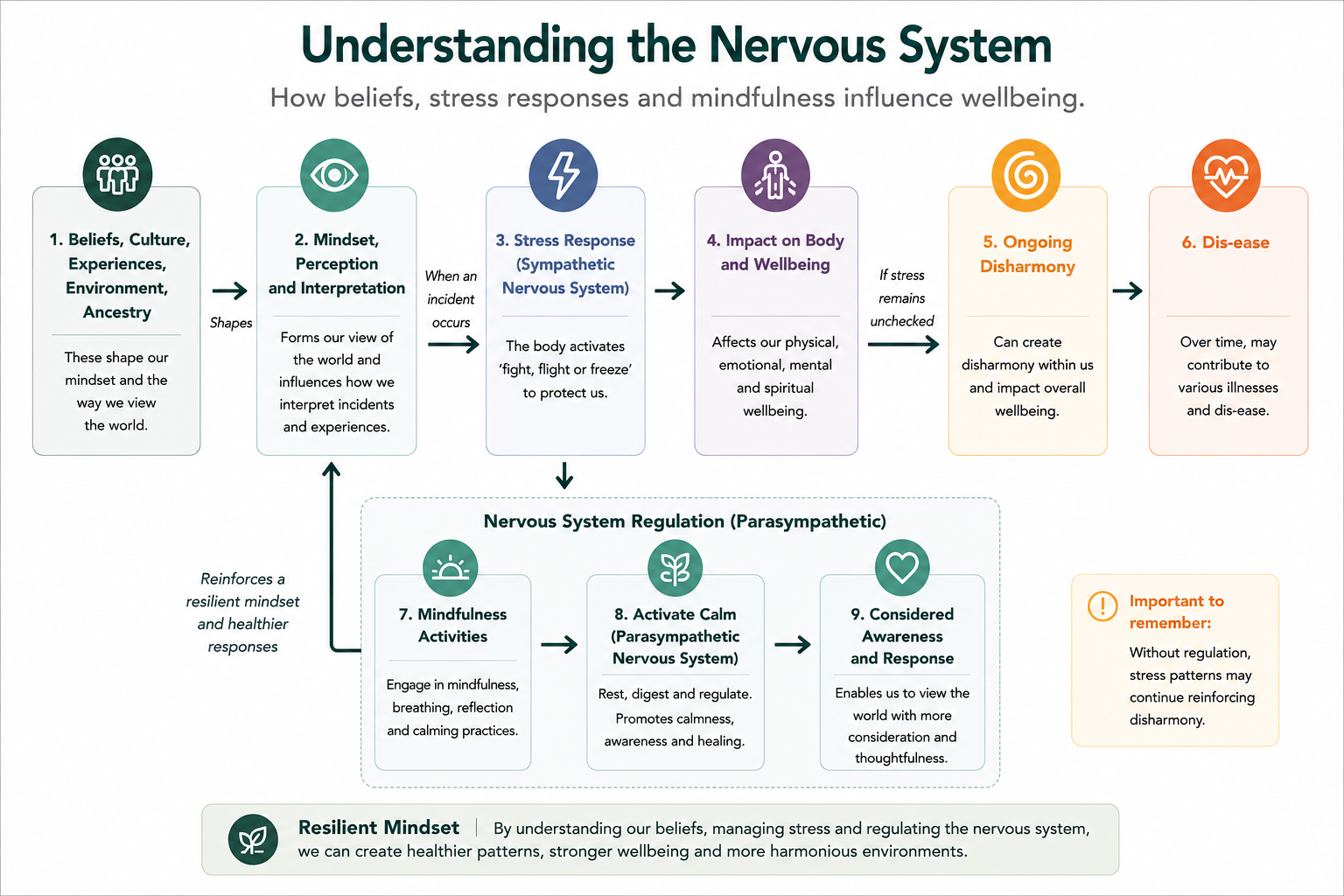
Our mindset and nervous system have a profound impact on our wellbeing.
The way we perceive and interpret the world is influenced by our beliefs, experiences, culture, environment and emotional patterns.
When we experience stress, challenge or uncertainty, the autonomic nervous system responds automatically to help protect us.
During stressful situations, the sympathetic nervous system activates the body’s “fight, flight or freeze” response. This stress reaction can influence not only the physical body, but also emotional, mental and spiritual wellbeing.
If stress remains unchecked and persists over time, it can create disharmony within us, potentially leading to various illnesses and dis-ease.
Our beliefs also play an important role in shaping our mindset, perception and behaviours. Self-limiting beliefs can narrow the way we view ourselves, others and situations, often reinforcing stress patterns and emotional overwhelm.
Mindfulness and nervous system regulation practices can help calm the stress response and activate the parasympathetic nervous system — the part of the nervous system associated with awareness, calmness, regulation and recovery.
As the nervous system becomes calmer and more balanced, people often notice:
greater emotional awareness
clearer thinking
improved self-regulation
healthier responses to stress
improved overall wellbeing
Developing a resilient mindset involves becoming more aware of the beliefs, emotional patterns and stress responses influencing our wellbeing and behaviours.
By challenging limiting beliefs, strengthening balanced perspectives and incorporating mindfulness into daily life, people are often able to create healthier ways of thinking, responding and relating — both within themselves and within the environments around them.
[Explore The Belief Cycle]
Reflection and Awareness
What situations most activate stress or overwhelm within me?
What beliefs influence the way I respond to challenge or uncertainty?
What practices help me feel calmer, more grounded and emotionally regulated?
How do my emotional responses influence the environments around me?