

Resources
Understanding the Behaviour Flow
Exploring the deeper beliefs, values and emotional patterns that often sit beneath behaviour, creating greater understanding of ourselves and others.
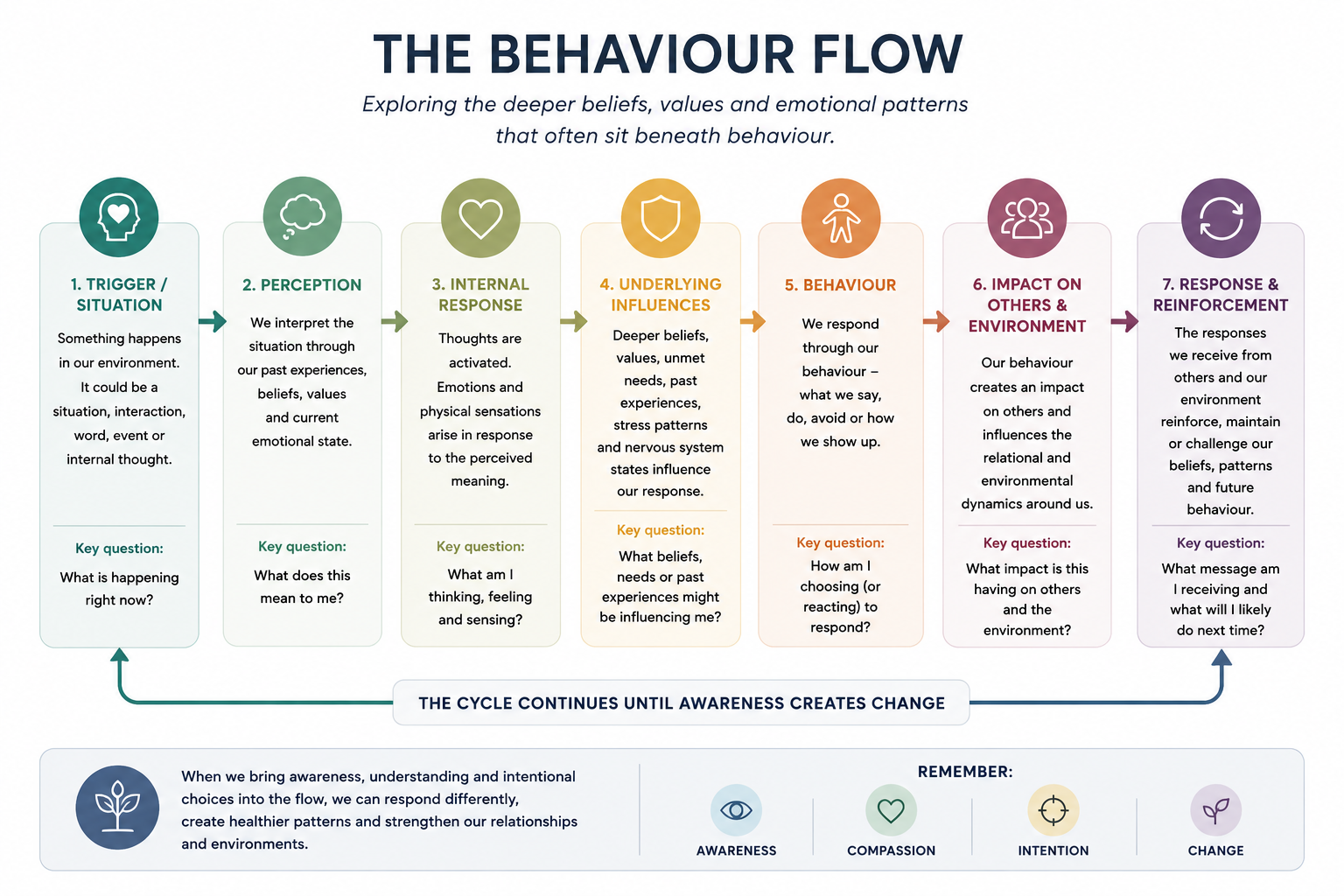
Understanding Behaviour Differently
Behaviour is often viewed only through what we can see externally — reactions, communication, withdrawal, conflict, emotions or actions.
However, behaviour is often influenced by much deeper internal experiences.
Beneath behaviour are often beliefs, emotional responses, stress patterns, values, unmet needs, perceptions, past experiences and environmental influences.
When we begin understanding what may sit beneath behaviour, we are often better able to respond with awareness, compassion and relational understanding rather than judgement or reaction.
What Influences Behaviour?
Behaviour is shaped by a combination of beliefs, emotional wellbeing, nervous system regulation, stress, relationships, environments, culture, identity and lived experiences.
Two people can respond very differently to the same situation depending on the beliefs, experiences and emotional patterns influencing them internally.
This is why behaviour is rarely as simple as what we see on the surface.
Behaviour as Communication
Behaviour often communicates something deeper. Sometimes behaviour may reflect:
fear or uncertainty
stress or overwhelm
emotional hurt or disconnection
lack of belonging
self-protection or survival responses
frustration, shame or unmet emotional needs
This does not mean harmful behaviour should be excused. However, understanding what may be influencing behaviour often creates greater opportunity for healthier responses, relational safety, accountability and long-term change.
Values and Behaviour
Behaviour is often influenced not only by beliefs and emotional responses, but also by the values people hold most strongly.
For example:
people who value connection may prioritise belonging and relationships
people who value safety may avoid conflict or vulnerability
people who value control may seek certainty and predictability
people who value honesty may communicate directly and openly
Sometimes tension within relationships or environments occurs because people are operating from different values, needs or priorities. As awareness grows, people are often better able to navigate these differences with greater understanding, communication and relational awareness.
Responding Rather Than Reacting
As awareness grows, people are often better able to pause before reacting, recognise emotional triggers, understand their own patterns and communicate more intentionally. This shift from unconscious reaction toward conscious response is an important part of relational wellbeing and transformational growth.
Behaviour Within Environments
Behaviour does not occur in isolation. The environments people experience within whānau, teams, organisations, kura and communities all influence the way people feel, relate and respond. Environments grounded in safety, belonging, communication and emotional awareness often support healthier relational patterns and behaviours. Over time, repeated behaviours collectively begin shaping the emotional and cultural environment experienced by everyone within that space.
Beyond Judgement
One of the most important shifts within this work is moving beyond simply judging behaviour and becoming more curious about what may be influencing it.
This does not remove accountability. Instead, it creates opportunities for:
deeper understanding
healthier communication
relational repair
emotional growth
stronger connection
safer and more supportive environments
Connected Frameworks
Relational Wellbeing
Reflection and Awareness
What behaviours do I notice most often within myself during stress or challenge?
What beliefs or emotional patterns may influence those behaviours?
How do my environments influence the way I respond and relate?
When do I feel most emotionally safe and regulated?
How do my responses influence the people and environments around me?
What might sit beneath the behaviours I see in others?