

Resources
Understanding The Spectrum of Belief
Exploring how self-limiting beliefs, balanced beliefs and overcompensating beliefs influence behaviour, wellbeing and relationships.
Understanding the Spectrum of Belief
Beliefs rarely exist in isolation.
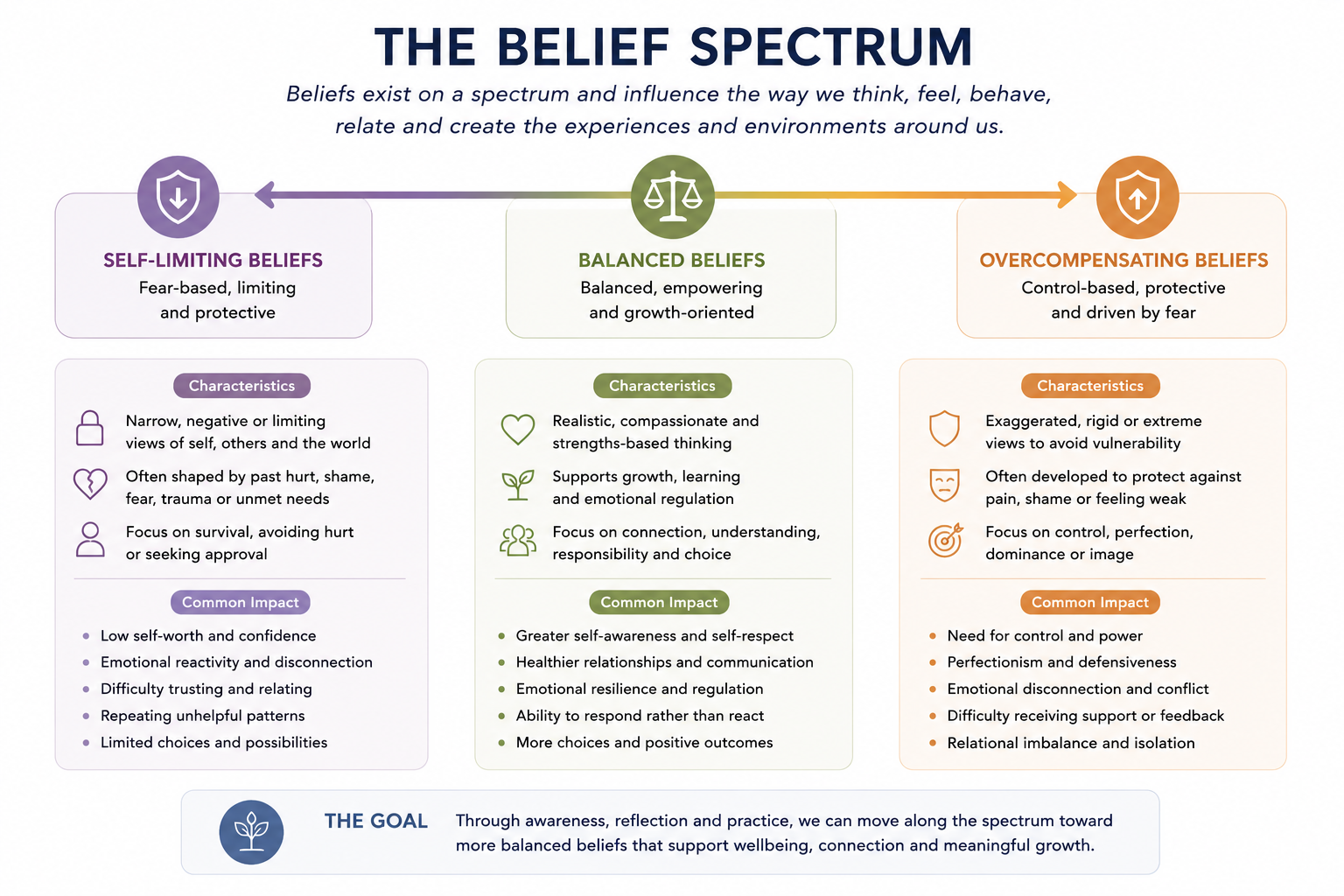
Many beliefs exist on a spectrum, influencing the way people think, feel, behave and relate to others.
Within this work, we often explore three common positions along that spectrum:
self-limiting beliefs
balanced beliefs
overcompensating beliefs
Each position influences behaviour, emotional wellbeing, relationships and the environments people create around them.
Self-Limiting Beliefs
Self-limiting beliefs are beliefs that narrow the way people see themselves, others or the world around them.
These beliefs are often connected to:
fear
shame
rejection
inadequacy
lack of control
unworthiness
emotional hurt
stress or trauma
Examples may include:
“I’m not good enough.”
“I don’t belong.”
“People will hurt me.”
“I have no choice.”
“I’m not safe.”
When people operate from self-limiting beliefs, behaviours are often influenced by self-protection, fear, emotional survival or disconnection.
This can impact:
confidence
communication
relationships
emotional regulation
belonging
wellbeing
Balanced Beliefs
Balanced beliefs support healthier ways of thinking, relating and responding.
Balanced beliefs are not about perfection or positivity at all times.
Instead, they allow people to:
see situations more clearly
respond rather than react
maintain self-awareness
hold compassion for themselves and others
navigate challenge with greater resilience and emotional regulation
Examples may include:
“I have value.”
“We are all worthy.”
“I can learn and grow.”
“I can respond differently.”
“I am capable of working through challenges.”
Balanced beliefs often support:
healthier relationships
emotional wellbeing
relational safety
clearer communication
stronger connection and belonging
Overcompensating Beliefs
Sometimes people move beyond self-limiting beliefs into overcompensating beliefs.
Overcompensating beliefs often develop as protective strategies designed to avoid vulnerability, hurt, shame or fear.
Examples may include:
“I’m the only one who’s right.”
“I must always stay in control.”
“I have to prove my worth.”
“I don’t need anyone.”
“My needs matter more than others.”
While overcompensating beliefs may sometimes appear confident externally, they are often still connected to deeper unmet needs, fear or emotional protection.
These beliefs can influence:
control
perfectionism
defensiveness
emotional disconnection
conflict
relational imbalance
The Same Belief Can Appear Differently
One of the most important understandings within this framework is that the same core belief can influence behaviour in very different ways.
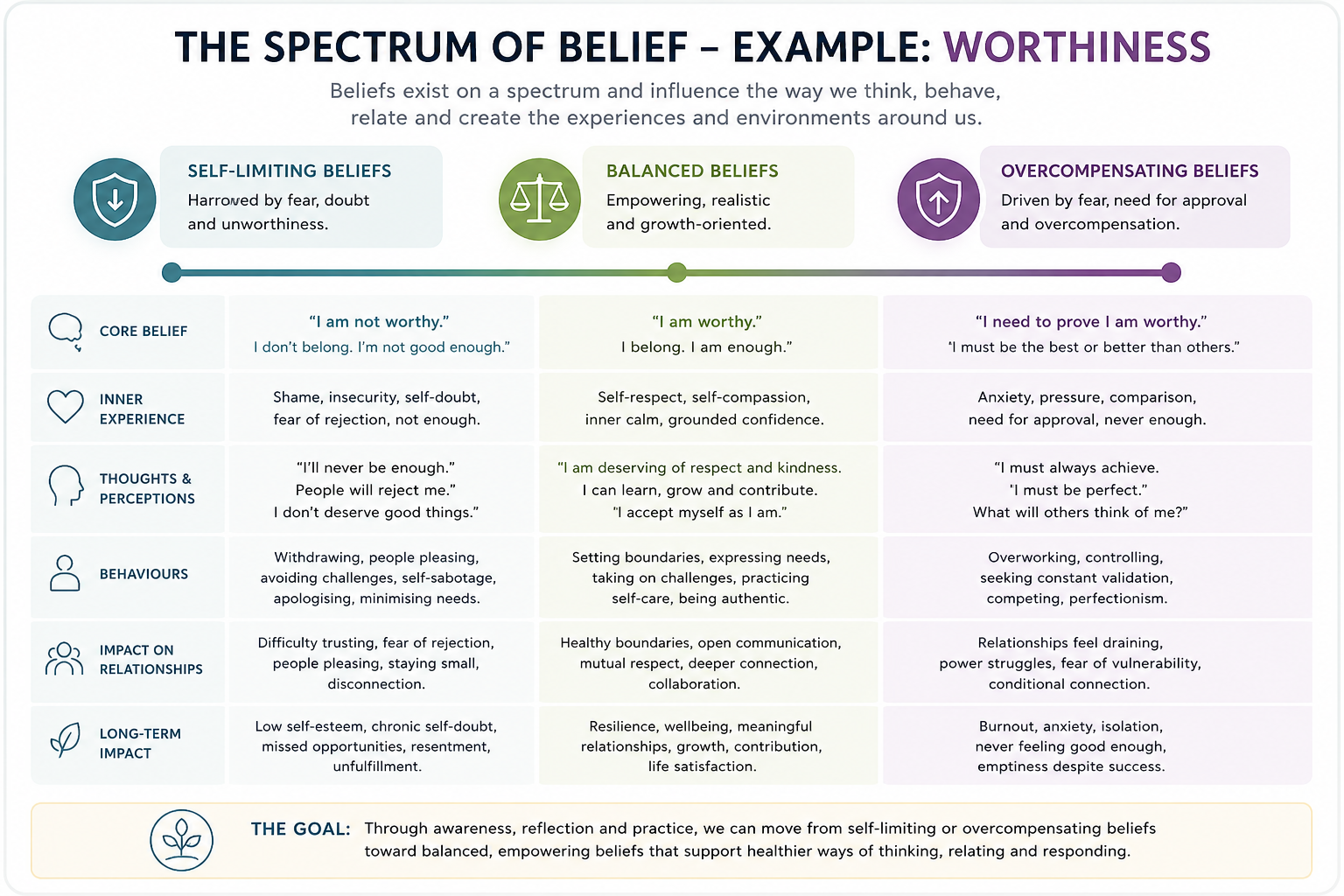
For example:
Worthiness
Self-limiting belief:
“I am not worthy.”Balanced belief:
“We are all worthy.”Overcompensating belief:
“I am the only one who is worthy.”
Although the behaviours may look different externally, they can still be connected to the same underlying belief pattern.
This understanding helps move people beyond judgement and toward greater awareness, compassion and relational understanding.
Creating New Beliefs
As awareness grows, people are often better able to:
recognise limiting patterns
strengthen balanced beliefs
regulate emotional responses
improve relationships
respond more intentionally
create healthier environments
Developing balanced beliefs is an ongoing process of awareness, reflection, practice and relational growth.
Beyond the Individual
Belief patterns influence more than individuals.
Collective beliefs also shape:
teams
organisations
whānau
communities
culture
relational environments
Over time, repeated beliefs and behaviours begin influencing the emotional safety, communication patterns and collective wellbeing experienced within environments.
This understanding connects closely with:
Relational Wellbeing
The Environments We Create
Te Āhurutanga
Connected Frameworks
Reflection and Awareness
What beliefs most influence the way I see myself and others?
Where do I notice self-limiting or overcompensating patterns within myself?
What behaviours emerge when I feel unsafe, overwhelmed or emotionally triggered?
What balanced beliefs would support healthier ways of relating and responding?
How do my beliefs influence the environments I create around me?
What beliefs would support greater wellbeing, connection and relational safety?