

Resources
Relational Wellbeing
Exploring how the way we think, relate and respond influences the environments around us, and how positive shifts within ourselves can strengthen connection, wellbeing and the environments we share with others.
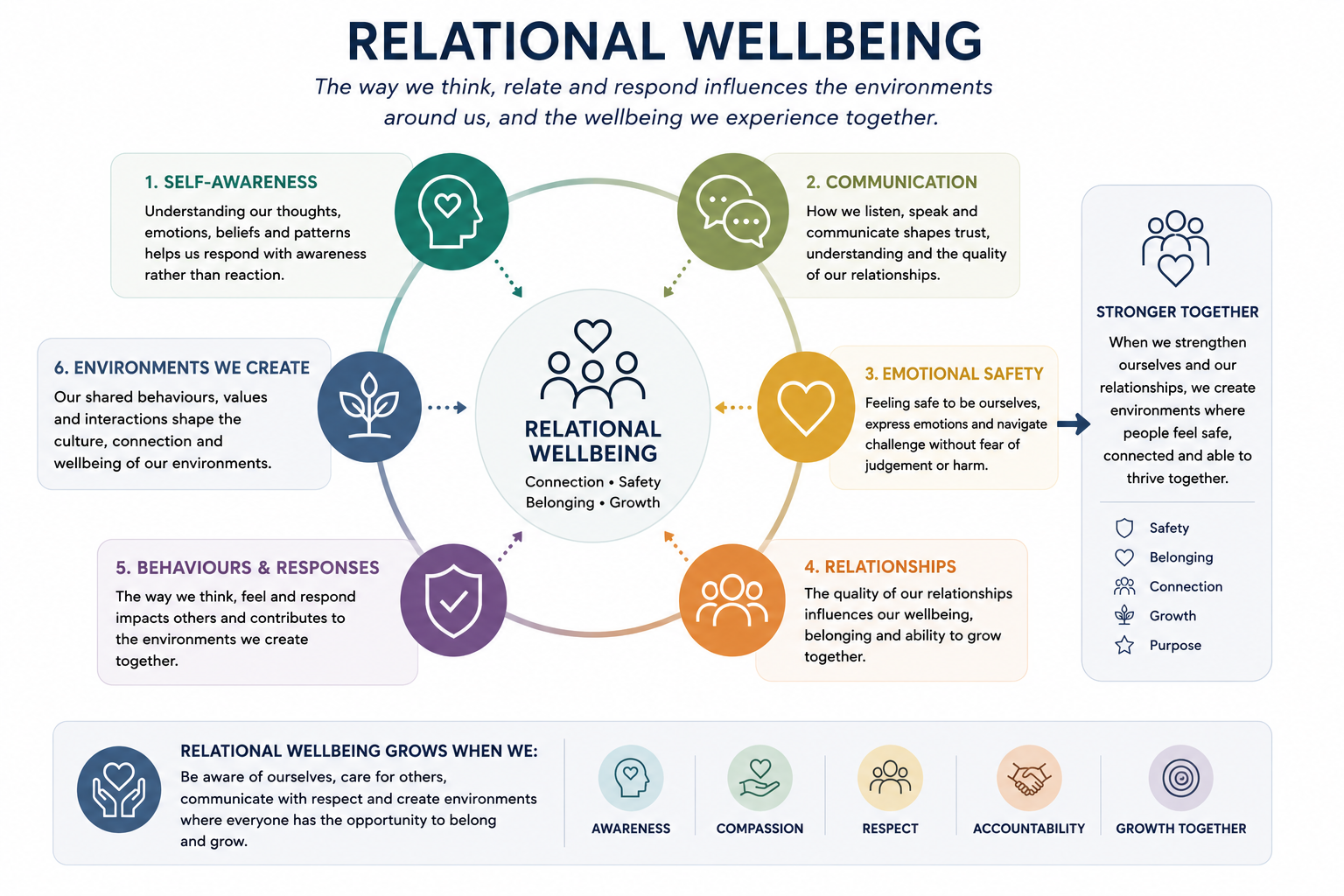
Understanding Relational Wellbeing
Relational wellbeing explores the connection between self-awareness, communication, behaviour, emotional wellbeing and the environments people experience together.
The way we think, feel, communicate and respond does not only influence us individually - it also influences the people and environments around us.
Over time, repeated relational patterns begin shaping the emotional and cultural environments experienced within whānau, teams, organisations, kura and communities.
The Environments We Create Together
Every interaction contributes to the environments people experience.
The way people communicate, respond to stress, navigate challenge and relate to one another gradually shapes the emotional and relational environments experienced within whānau, teams, organisations, kura and communities.
Over time, repeated behaviours and emotional patterns often become normalised, influencing:
trust
wellbeing
belonging
communication
emotional safety
collective culture
This means environments are not only shaped through structures or intentions, but also through the everyday ways people respond, relate, lead and support one another.
As awareness grows, people are often better able to intentionally create environments grounded in:
wellbeing
accountability
compassion
belonging
relational safety
collective growth
Emotional Safety and Connection
People are often better able to learn, grow, communicate and reflect when they feel emotionally and relationally safe. Relational wellbeing is not about perfection or avoiding challenge. It is about creating environments where people feel safe enough to:
show up authentically
communicate honestly
navigate challenge respectfully
repair relationships
continue growing together
Shared Ways of Being
As awareness and understanding strengthen within groups, people often begin identifying shared values, healthier ways of communicating and more intentional ways of relating to one another.
This often becomes the foundation for creating environments grounded in:
wellbeing
belonging
accountability
trust
compassion
collective growth
Connected Frameworks
Reflection and Awareness
What environments help me feel emotionally safe and connected?
How do my behaviours and emotional responses influence others around me?
What relational patterns do I notice within my environments?
What helps strengthen trust, belonging and communication?
How do people experience the environments I help create?